If you are a foreign founder or brand entering South Korea, checking trademark availability before filing is not optional. Filing without a proper search is one of the fastest ways to lose your application fee and get rejected. This guide shows you exactly how to run a trademark availability search in South Korea using KIPRIS in English.
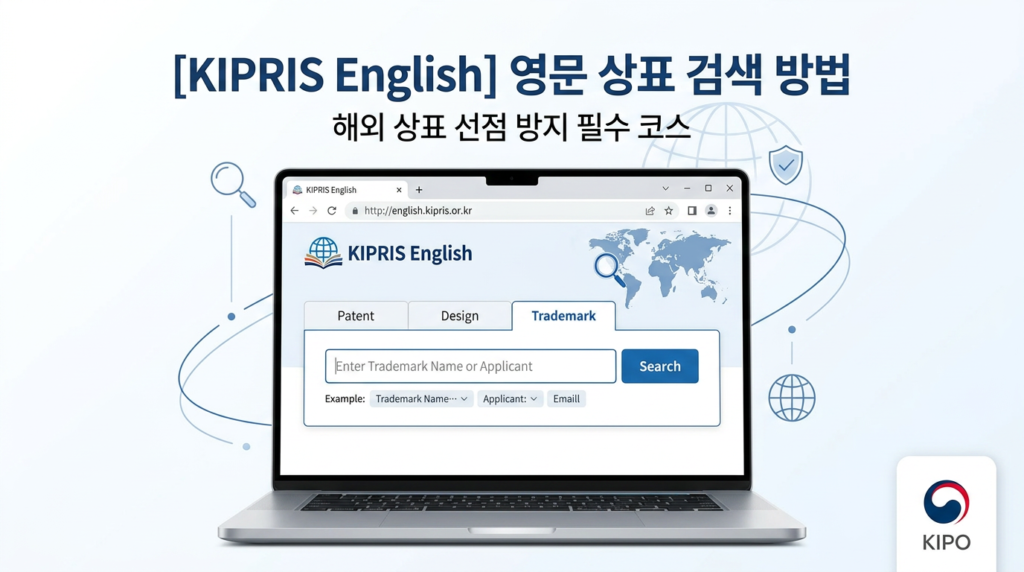
What Is KIPRIS?
KIPRIS is the official trademark database managed by KIPO, the Korean Intellectual Property Office. It contains every registered and pending trademark in South Korea.
KIPO searches this database before examining your application. If your mark conflicts with an existing or pending trademark, your application will be rejected. Running the search yourself is free and helps you avoid this outcome.
You can access KIPRIS in English at english.kipris.or.kr.
Does South Korea Use First-to-File or First-to-Use?
South Korea follows a strict first-to-file system. The first person to file the trademark application owns the rights, not the first person to use the mark.
This creates a specific risk for foreign brands. Trademark squatters often monitor foreign brand activity and register marks before the original owner does. Even if you have been using your brand for years, someone else can legally own it in Korea if they file first.
What Counts as a Conflicting Trademark in South Korea?
KIPO rejects applications for three main reasons.
- The mark is identical to an existing registered mark in the same class.
- The mark is visually similar to an existing mark and likely to cause confusion.
- The mark is phonetically similar to an existing mark when pronounced in Korean.
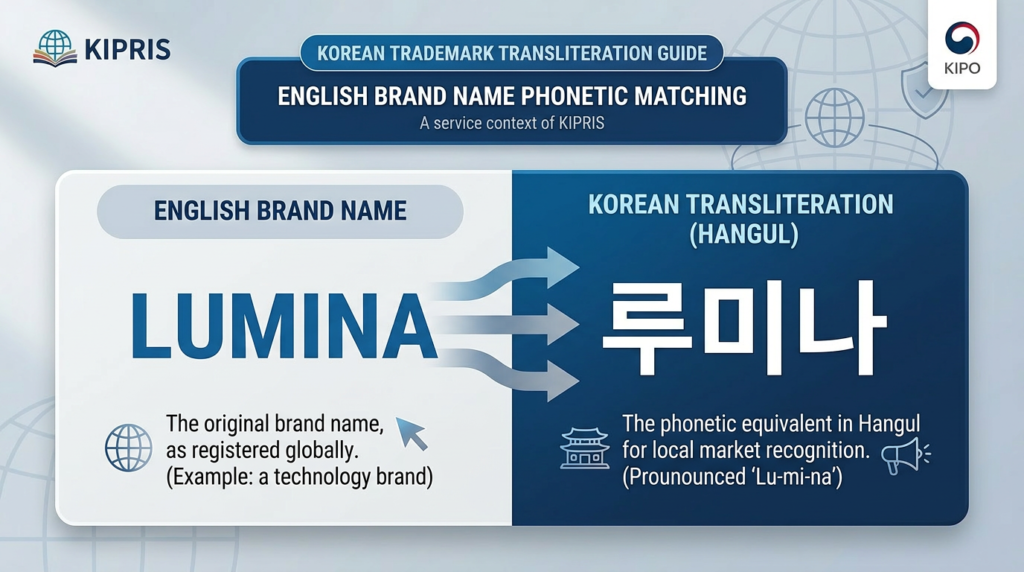
The phonetic rule is especially important for foreign brands. Even if your English name looks completely different from a Korean trademark, KIPO can reject it if the two sound alike in Hangul.
Step 1: Access KIPRIS in English
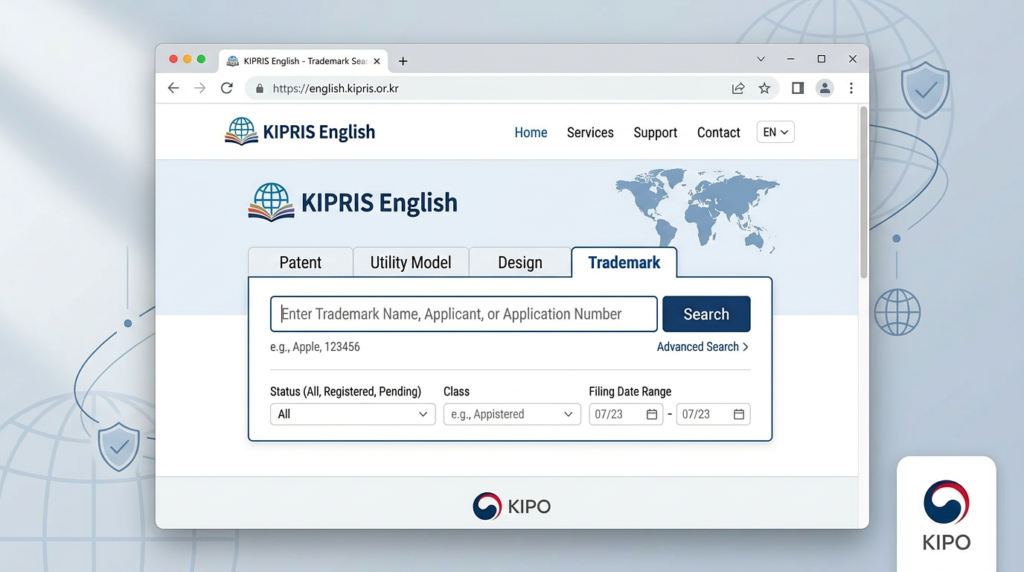
Go to english.kipris.or.kr and select Trademark Search.
- You will see two options. Simple Search is a basic search by word or phrase.
- Advanced Search allows filtering by Nice class, status, and dates.
- Use Advanced Search for a proper clearance search. Simple Search alone is not enough.
Step 2: Search Your Trademark in English and Hangul
- Enter your brand name exactly as you plan to file it. KIPRIS will show all marks containing that term.
- Next, search the Korean phonetic version of your brand name. Use a romanization tool to convert your name into Hangul and search that version as well.
- This two-step process helps you catch both direct conflicts and phonetic conflicts, which are the most common reasons for rejection.
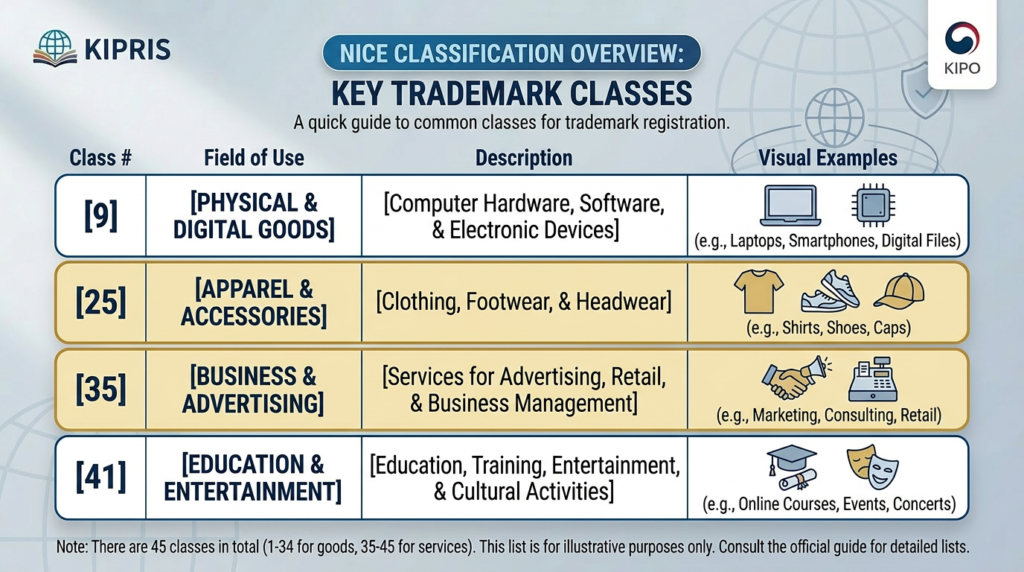
Step 3: Choose the Right Nice Classification Classes
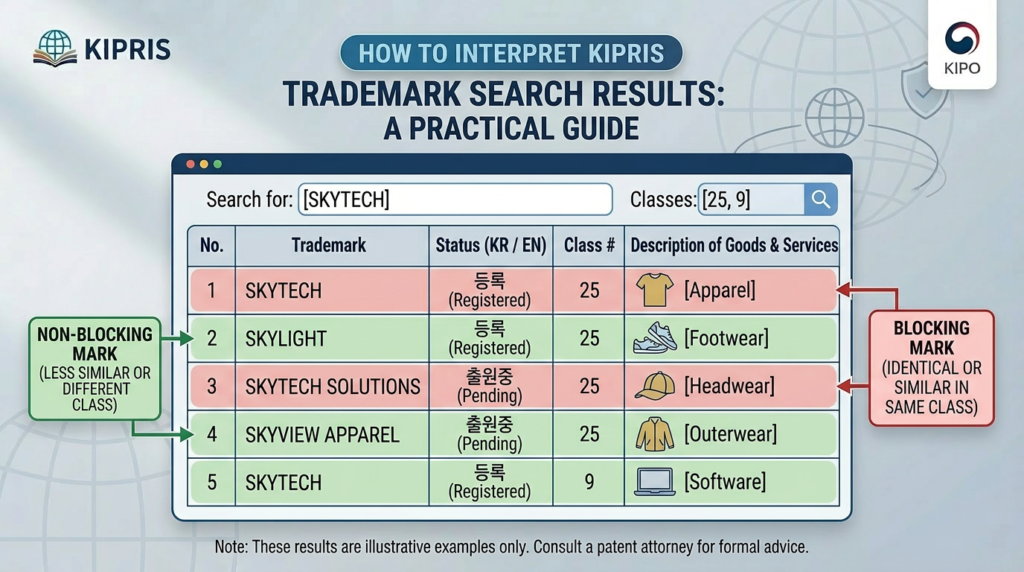
- Trademarks in South Korea are registered by class. A mark registered in one class does not automatically block the same name in another class.
- Search every class that covers your current and future business activities. Do not limit your search to only your main class.
Step 4: Evaluate the Search Results
- Review the results and focus on marks with registered or pending status in your target classes.
- Expired or cancelled marks are generally not blocking, but you should still check the cancellation date and confirm no appeal is pending.
What Is the 3-Year Non-Use Rule in South Korea?
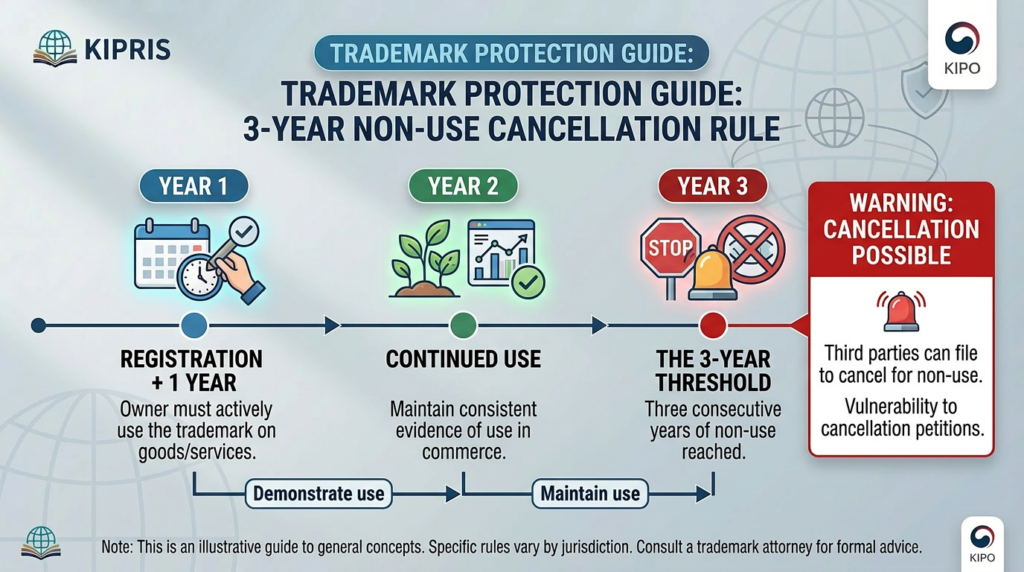
A registered trademark can be cancelled if the owner has not used it for three consecutive years. This is called a non-use cancellation.
If you find a conflicting mark that appears unused, you may be able to cancel it. However, this process takes time and money. It is often faster to adjust your brand or choose a different name before filing.
Common Mistakes Foreign Founders Make
Many foreign applicants make these mistakes when searching KIPRIS.
Searching only in English and missing Hangul-only marks. Ignoring pending applications that were filed before theirs. Filing in too few classes to save money, which blocks future expansion. Assuming a Madrid Protocol registration automatically protects their mark in Korea without running a local search.
What Should You Do After the Search?
If your KIPRIS search shows no blocking marks, you can prepare your filing. Running a proper search first gives you a clear path and reduces the risk of rejection. You can then file directly through KIPO’s online system or work with a local agent if you prefer.
Ready to Build Your Trademark Strategy for Korea?
If you are a foreign founder or French brand entering the Korean market, I build your complete trademark and contract strategy, including availability search, class selection, and filing roadmap, so your application is ready to submit. In English and French.
Contact: jessicaingrid.com